
LIGATURE-RESISTANT PRODUCTS MAKE BEHAVIORAL HEALTH
ENVIRONMENTS SAFER FOR PATIENTS
Nona Peterson 9-17-2025
Which Behavioral Health Facilities are Incorporating Ligature-Resistant Elements?
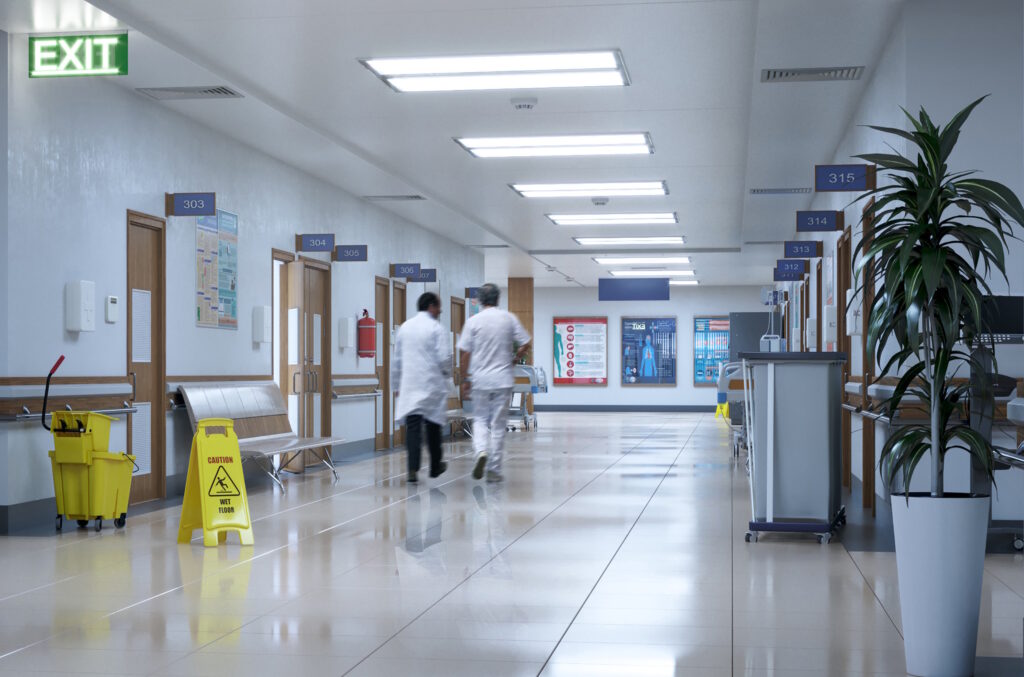
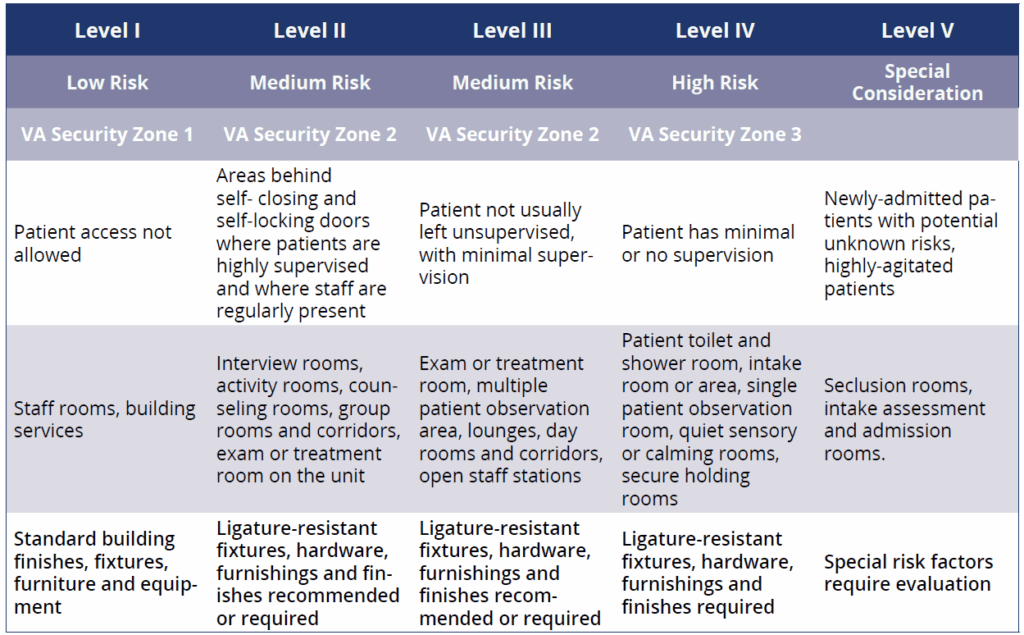
In many countries, inpatient psychiatric units and behavioral and mental health units in outpatient or general hospitals are required to be designed for the patient’s physical safety. Environmental design to protect patients from self-harm can apply to risk Level II areas where patients are highly supervised and where staff are regularly present, to Level V areas where patients may present unknown risks. Those requirements do not usually apply to non-psychiatric units of hospitals except in the case of behavioral health crisis units.
Definition of Ligature-Resistance
One area of focus in high-risk settings is to achieve a ligature-resistant environment which is
defined by The Joint Commission (TJC) as
“without points where a cord, rope, bedsheet, or other fabric/material can be looped or tied to
create a sustainable point of attachment that may
result in self-harm or loss of life”
Codes and Testing Standards
There are no codes for ligature-resistant products, only standards and guidelines, however, since those are tied to facility certification/accreditation, the adoption rate is nearly universal.
Since there are also no specific testing standards in the US and Canada for approving ligature-resistant products, many product manufacturers have created their own testing methods.
In the state of New York, the NYS-OMH has worked with the Architecuret+ Group to create a product evaluation process that assigns a risk classification to products. The risk assessment results in products being approved for use in typical high, medium or low risk areas as assigned by the facility’s own risk assessment. The document is called “Patient Safety Standards, Materials and Systems Guidelines Recommended by the New York State Office of Mental Health”. Some architects and contractors have begun to use the NYS-OMH guidelines, because of the standardized evaluation process, however OMH does not endorse or guarantee the performance of products used in the guide.
In the UK, DHF TS 001:2013 is a standard that contains requirements and test methods for all door mounted hardware and other building products which are classified as anti-ligature devices.
Regulation of Facilities
In Canada, Health Canada oversees the healthcare system, and provinces and territories are responsible for regulating facilities. In the US, states regulate medical facilities, and CMS administers standards compliance of organization that accept Medicare or Medicaid funds. Several local or governmental agencies have developed their own set of guidelines, and 43 US states have adopted FGI guidelines – here are some examples.
New York State Office of Mental Health (NYS-OMH) provides guidelines on patient safety standards including material and system guidelines for inpatient psychiatric facilities. They provide a list of products for new construction and renovation projects that have been tested in conformance with their own testing and/or evaluation protocols by the Architecture+ Group. On their website they note that they do not endorse any product or manufacturer of products, and that their list is not all-inclusive.
The US Department of Veterans Affairs (VA) provides an extensive design guide for inpatient mental health and residential rehabilitation treatment facilities. The VA utilizes outside accreditation such as TJC, CARF and CMS.
Which Agencies have Developed Standards?
There are several organizations providing guidelines that address suicide prevention in behavioral health settings. Some are government agencies, others provide healthcare organization accreditation. All of the accreditation agencies emphasize prevention and periodic risk assessments of the environment in conjunction with corrective action recommendations. Because the standards developed by these organizations have been incorporated as a point of accreditation, this has led to near-universal adoption of ligature-resistant environments in those specialized behavioral health facilities.
In the US, Centers for Medicare & Medicaid Services (CMS) provides direction and clarity to state survey agencies and accrediting organizations regarding ligature risk and assessment of the patient care
environment.
The Facility Guidelines Institute (FGI) is a nonprofit organization that utilizes input and expertise from healthcare designers and medical professionals to develop guidelines for designing and building hospitals and other health care facilities
CSA Group in Canada, a not-for-profit Standards organization, developed the Z8000:24 Standard which is the primary standard in Canada for healthcare facility design. That standard provides guidance and requirements where ligature risk is a concern.
Health Standards Organization (HSO) focuses on developing standards and assessment programs that are delivered by partners such as Accreditation Canada. The CAN/HSO 5064:2023 (E) Suicide Prevention Program Standard supports the creation of comprehensive programs that include minimizing risk of suicide in the physical environment.
Agencies that Offer Accreditation
The Joint Commission (TJC) sets standards plus provides accreditation and certification for over 24,000 healthcare organizations and facilities in more than 70 countries. TJC promotes suicide risk reduction through assessment of the healthcare environment (EC.02.01.01 EP 1). Many standards are based on CMS and FGI guidelines.
Commission on Accreditation of Rehabilitation Facilities (CARF) assesses and has incorporated suicide prevention including ligature-resistance into its accreditation standards. They also develop standards for those types of facilities. CARF accredits over 30,000 locations internationally.
Accreditation Canada with 14,000 locations in more than 40 countries, assesses organizations against standards developed by Health Standards Organization (HSO). This includes the CAN/HSO 5064:2023 (E) Suicide Prevention Program standard.
Ligature-Resistant Products
Products may be known as anti-ligature or ligature-resistant, but not “ligature-free”, as it is not possible to remove all potential ligature points in a room. From door hardware to toilet accessories, commercial building product manufacturers have developed and performed internal testing on products that can minimize risk.
A particular focus is on products that have an above-the-waist ligature attachment point including shower heads, door vision panels, access doors, light fixtures and ceiling systems. Additional products that have been designed to be ligature-resistant include door handles, faucets and toilet accessories.
Elements of ligature-resistant products may include
Eliminating attachment and ligature points at the top of a product or on doors – many products have beveled or rounded edges that cannot support a ligature
Use of concealed or tamper-proof fasteners that are flush-mounted or recessed into the face of the product
Installation methods – products intended to be mounted to a wall or ceiling can have rigid flanges that can be embedded in drywall compound. Products with a flange can be installed with anti-pick caulking or sealant to fill any gap.
Maximum breakaway weight for toilet accessories and hanging products such as curtains
Select recessed furnishings, with sloped tops.
Ligature-resistant drain assemblies and specialty toilets.
Diffusers and grilles with small perforations
Enclosed furniture bases
Ligature-Resistant Products are One Part of a Safer Behavioral Health Environment
It is the responsibility of the healthcare organization to perform patient risk assessments and provide staff training to identify potential risk in their facilities.
Whether products are specified in the design phase, or as a retrofit, they should be selected carefully with an eye to patient safety. Periodic review of risk for self-harm, followed by remediation if required, is now part of most healthcare facility accreditation processes.
Environmental Safety Risk Assessment
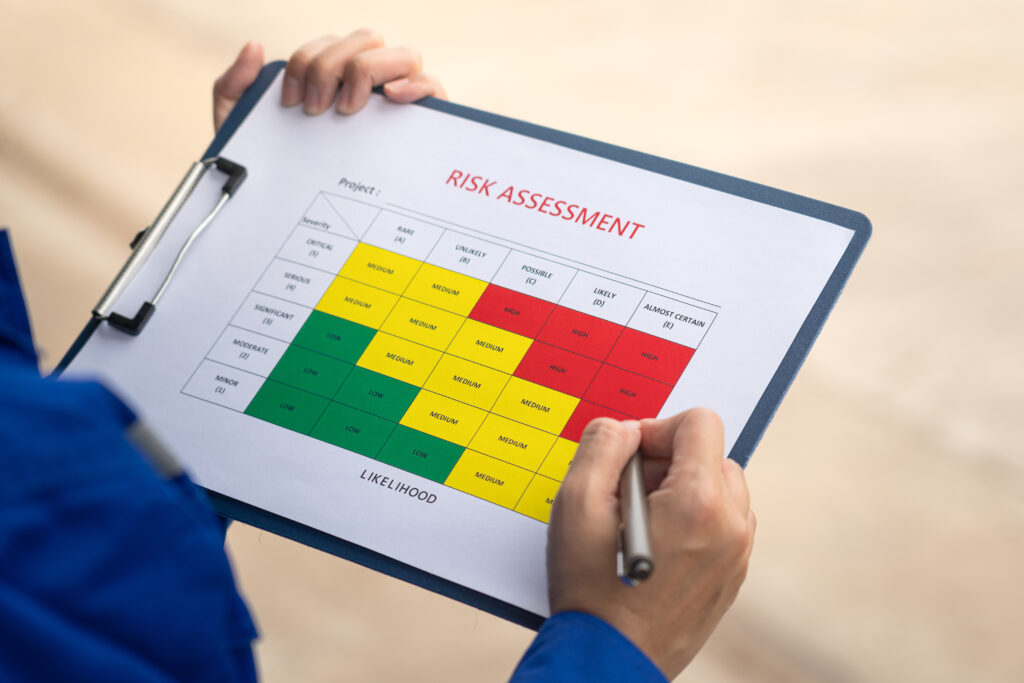
FGI guidelines require that an interdisciplinary team develop a safety risk assessment for each project and type of environment. Additionally, periodic reassessments and corrective action, if required, are part of accreditations. Risk assessment tools such as the “Safety Risk Assessment Free Toolkit” offered by the Center for Health Design can provide guidance for designing a safer behavioral health environment.
Below is a table with information excerpted from FGI and the VA. Risk is assigned based on the level of risk for patient harm within a type of space. Use as a general guideline only and consult your organization’s risk assessment for your unique facility.
References & Website Links
Accreditation Canada: https://accreditation.ca/
Center for Medicare: https://www.cms.gov/
Center for Health Design: https://www.healthdesign.org/sra. Safety Risk Assessment Free Toolkit
Commission on Accreditation of Rehabilitation Facilities (CARF): https://carf.org/accreditation/our-standards/
CSA Group: https://www.csagroup.org/standards/areas-of-focus/healthcare-and-well-being/standards-for-safer-health-care-facilities-in-canada/. For Canadian website users, the CSA Z8005 document can be viewed free in this link. It is also available for purchase.
Facility Guidelines Institute: https://fgiguidelines.org/. The most current version of Hospital and Outpatient Guidelines documents can be purchased on this website. Free download of the Behavioral Health Design Guide at this website: https://www.bhfcllc.com/design-guide
Health Standards Organization: https://healthstandards.org/
New York State Office of Mental Health: https://omh.ny.gov/omhweb/patient_safety_standards/
Free download of the Patient Safety Standards, Materials and Systems Guidelines Recommended by the New York State Office of Mental Health is available on that webpage
Standards Council of Canada (SCC): https://scc-ccn.ca/
The Joint Commission: https://www.jointcommission.org/en-us/. 2022-Preventing Patient Suicide Guidelines available for purchase.
Maxam Metal Products – Ligature-Resistant Security Access Panel
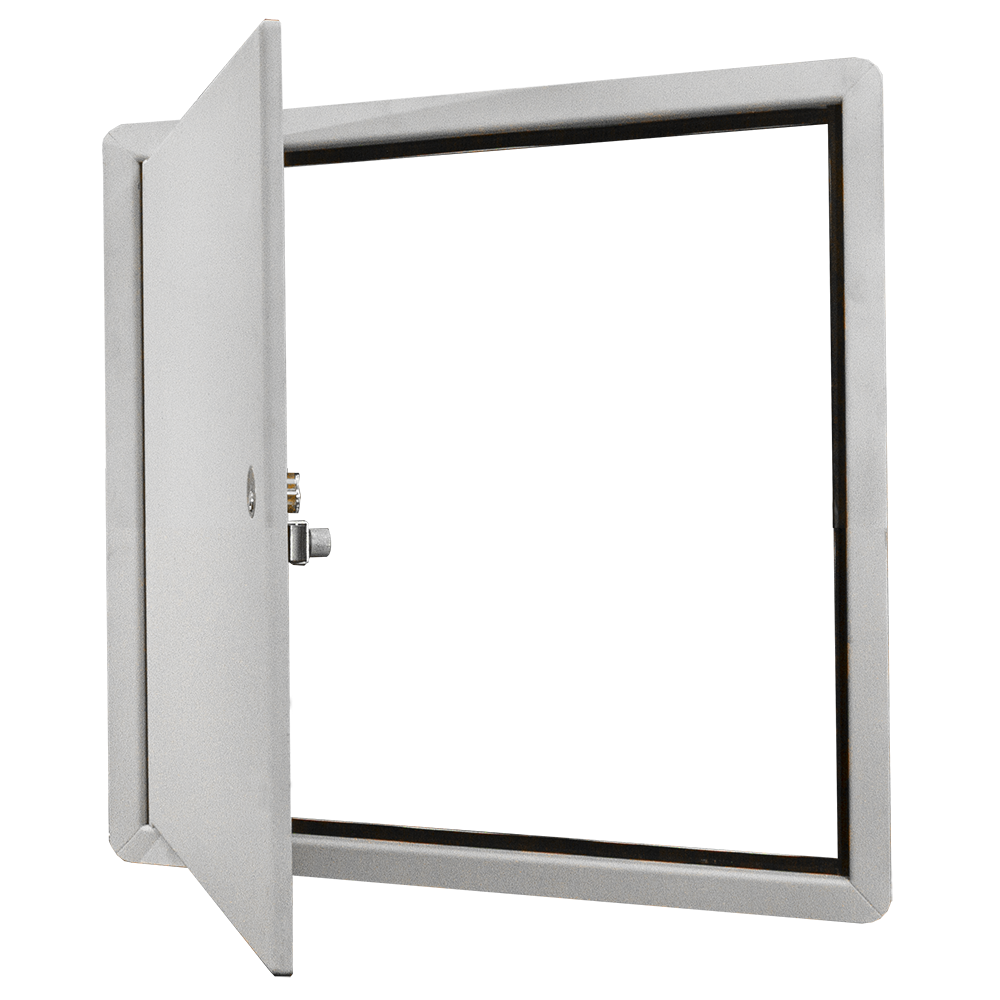
Maxam offers the NLR Ligature-Resistant Security
Access Panel. The NLR is designed with heavy-gauge steel and used to access building components in walls or ceilings. Ligature-resistant features include a concealed hinge, rounded flange corners, door gasketing on three sides and an installed five pin mortise cylinder lock.
Maxam has completed internal ligature testing, and the panel will be evaluated soon by the NYS-OMH for potential inclusion in their list of products for use in behavioral health settings.
For more information on this product, visit the NLR Product Webpage
This information is intended to be informational only – please reference requirements by your accreditation agency, local guidelines and your local authority having jurisdiction. Products mentioned in this article are designed to decrease the likelihood that they may be used as an apparatus for ligature. They are not a replacement for medical staff who are trained in the management and supervision of people who may be at risk of suicide.